


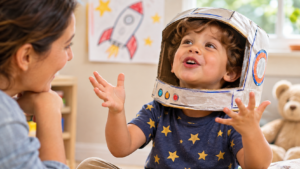
Your child insists a dinosaur knocked over the juice, claims they brushed their teeth when their toothbrush is still dry, or tells you an elaborate story about flying to the moon. Sound familiar? At this age, children are becoming incredible storytellers, but their growing imaginations can sometimes make it difficult to separate fact from fiction. While these moments may leave you wondering whether your preschooler is learning to lie, the truth is that making up stories is often a normal and fascinating part of development.
Highlights
- At around age 3 ½, imagination and storytelling skills are expanding rapidly.
- Preschoolers may exaggerate, pretend, or bend the truth for different reasons.
- Making up stories doesn’t automatically mean your child is being dishonest.
- Gentle responses and playful activities can help children understand the difference between reality and make-believe.
Why Preschoolers Make Up Stories
Around this age, your child’s language, memory, imagination, and social understanding are developing quickly. They can create increasingly detailed stories, connect events, and imagine situations that haven’t actually happened.
Sometimes, children become so absorbed in pretend play that they carry elements of their imaginary worlds into everyday conversations. Other times, they’re experimenting with what happens when they say something surprising or unexpected.
For example, your child might announce that a giant elephant visited preschool. They may know they’re inventing a silly story, or they may be blending a real experience with something they’ve imagined.
This isn’t necessarily an attempt to deceive you. It’s often an opportunity to practice storytelling, creativity, and communication.
When Is It Actually Lying?
By this age, some children are beginning to understand that they can say something different from what really happened. They may even recognize that other people don’t always know what they know.
However, understanding honesty is a gradual process. Preschoolers are still developing the ability to consider other people’s perspectives, anticipate consequences, and manage uncomfortable feelings.
If your child denies spilling milk despite standing beside the puddle, they might be trying to avoid getting into trouble. That doesn’t mean they’re developing a dishonest personality.
Rather than focusing on catching them in a lie, try understanding what motivated their response.
How to Respond When Your Child Bends the Truth
Your reaction can help your preschooler develop a healthy relationship with honesty.
Stay calm and curious. Instead of saying, “You’re lying!” try, “I see milk on the floor. Let’s clean it up together.” This keeps the focus on responsibility rather than shame.
Distinguish imagination from reality. When your child shares an extraordinary story, ask, “Is that something that really happened, or is it a pretend story?” Keep your tone light and interested.
Make honesty feel safe. If your child admits to a mistake, acknowledge their honesty before addressing what happened. For example, “Thank you for telling me. Now let’s figure out how to fix it.”
Model truthful communication. Children learn by watching you. Being honest about everyday situations, including your own mistakes, demonstrates that telling the truth matters.
Encourage Imagination While Teaching Honesty
You don’t need to discourage imaginative storytelling to teach your child about honesty. In fact, pretend play offers wonderful opportunities to explore the difference between real and imaginary experiences.
Try making up stories together, taking turns adding silly details. You can also play a simple “real or pretend” game, asking whether different situations could happen in everyday life.
Reading picture books is another great way to explore storytelling. Ask your child which parts of a story could happen and which are make-believe.
These activities build language, creativity, and flexible thinking while introducing important concepts about truth.
The Big Picture
At age 3 ½, exaggerating and inventing stories are usually signs of a busy, developing mind rather than a serious behavior problem. Your child is learning how stories work, how people think, and how words influence others.
With patience, gentle guidance, and plenty of opportunities for imaginative play, you can nurture creativity while helping your preschooler understand why honesty matters.
Remember, the goal isn’t to stop your child from making things up. It’s to help them recognize when imagination is welcome and when telling the truth is important.